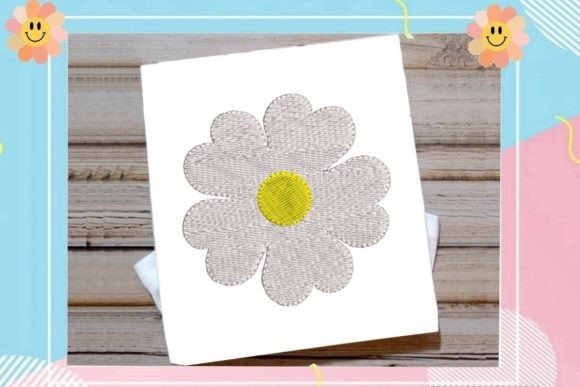
White Flower Design Review for Small Business Merch
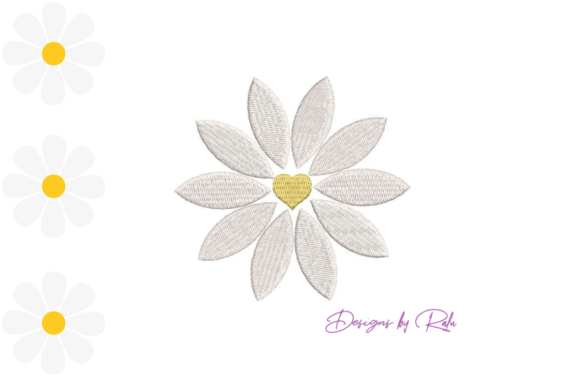
As an experienced embroidery designer who has reviewed thousands of digital files, I look at a design through two lenses: artistic merit and commercial viability. When evaluating a machine embroidery design for small business merchandise, the goal is never just decoration; it is about creating a cohesive brand asset that withstands production realities. Today, we are reviewing the "White Flower" design from the Single Flowers Plants category. This piece is described as a beautiful mini flower with vibrant colors, exuding simplicity and elegance. It is versatile enough to be added to other motifs or stitched directly. But does it hold up when scaled down for branded patches, staff uniforms, or high-volume tote bag runs? Let’s dive into the professional assessment.
First Impressions: Simplicity Meets Versatility
The title "White Flower" might suggest minimalism, but the description highlights "vibrant colors." This creates an interesting dynamic for a digital embroidery file. In my experience, designs that claim both simplicity and vibrancy often rely on strong thread contrast rather than complex shading. The first impression of this design is one of approachable elegance. It feels friendly yet professional, avoiding the overly rustic or cluttered looks that can make a brand appear amateurish.
For a small business owner—whether you run a boutique, a creative studio, or a local café—this visual personality is valuable. It strikes a balance between playful and polished. The fact that it is a "mini flower" suggests a smaller footprint, which is crucial for modern branding trends where subtlety often outperforms loud graphics. It exudes a handmade quality without sacrificing the clean lines expected in premium custom apparel.
Real-World Applications for Branded Merchandise
The true test of any embroidery file is its performance across different product types. Here is how White Flower translates to real business use cases:
- Embroidered Patches: Because the design is described as a mini flower, it is likely ideal for standard patch sizes (1.5 to 2 inches). It can serve as a standalone logo for a bakery or florist, or act as a subtle accent on a denim jacket. Its simplicity ensures it remains legible even when reduced in size.
- Staff Uniforms and Aprons: For service industry businesses, consistency is key. A single white flower motif can be placed on the chest pocket of a barista’s apron or the sleeve of a server’s shirt. It adds a touch of class without overwhelming the uniform. The vibrant colors will pop against dark workwear, enhancing brand identity while maintaining professionalism.
- Caps and Headwear: Cap embroidery requires designs that handle curvature well. Mini floral motifs are traditionally successful here because they follow the natural curve of the cap front. If the stitch density is appropriate, White Flower can become a signature mark for a hat line or a promotional item for a craft fair.
- Tote Bags and Canvas Goods: Tote bags are a staple for Etsy sellers and handmade brands. This design works beautifully as a centered chest logo or a repeated pattern along the side seam. The elegance mentioned in the description elevates a simple canvas bag into a premium shopping accessory, increasing perceived product value.
- Product Packaging Accents: Beyond apparel, this design can be used on fabric gift tags attached to your products. A small embroidered label featuring the White Flower motif adds a tactile, luxurious element to unboxing experiences, fostering customer trust and recognition.
Strategic Branding Impact
Using a design like White Flower affects more than just aesthetics; it influences buyer engagement. A cohesive visual language builds trust. When customers see consistent branding across your small business merch, from your website to your physical products, it signals reliability.
The "simplicity and elegance" of this design support a modern, clean brand identity. It avoids visual noise, allowing your product itself to remain the focus. For handmade products, this approach suggests that the creator values quality over quantity. It also allows for flexibility; since the design can be easily added to other motifs, you can build a larger brand universe around this core element. Perhaps the flower becomes a recurring symbol on your social media, your website favicon, and your physical labels, creating a powerful loop of visual consistency.
Critical Considerations and Limitations
No design is perfect for every application. As a designer, I must highlight where White Flower requires careful handling:
- Small Patch Sizes: While "mini," fine details can get lost if the patch is too small. Always verify that the individual petals and centers remain distinct at your target size.
- Curved Surfaces: Embroidering on curved items like caps or rounded bottle holders can distort straight lines. Ensure the design’s digitizing accounts for stretch.
- High Stitch Density: If the design uses dense satin stitches for outlines, it may become stiff. This is problematic for delicate fabrics like silk or thin cotton tees. Check the stitch density to ensure it matches your fabric weight.
- Dark Uniforms and Fabric Texture: The description mentions "white flower" but also "vibrant colors." On dark fabrics, the white elements may require a heavy underlay or specific thread choices to stand out. Similarly, highly textured fabrics (like heavy wool) can obscure fine details.
- Frequent Washing: For items that will be washed often, such as aprons or work shirts, ensure the thread colors are colorfast and the stitches are secure to prevent fraying.
Practical Designer Notes for Production
Before integrating White Flower into your production workflow, follow these essential steps to avoid costly errors:
- Test in Black and White: Convert the design to monochrome to check its structural integrity. If it loses impact without color, the shape itself may need refinement.
- Check Scale and Hoop Size: Confirm the hoop size limitations. Ensure the design fits comfortably within standard hoops to maximize machine efficiency.
- Review Thread Color Contrast: Since the design features vibrant colors, select threads that offer high contrast against your target fabric. Low contrast can make the design look muddy or faded.
- Inspect Spacing and Density: Zoom in on the digital preview. Are there overlapping stitches that could cause puckering? Is there enough negative space to let the design breathe?
- Test on Real Fabric: Never skip the sample run. Use the exact fabric and stabilizer combination you plan to use for final production. This reveals issues with shrinkage, stiffness, or registration.
- Create a Printable Mockup: Before committing to bulk production, create a printable mockup to show clients or stakeholders. This helps visualize the final product on actual items.
- Compare Against Other Assets: Place White Flower beside your existing logos and design assets. Does it harmonize? Does it fit the overall aesthetic?
- Confirm Commercial Licensing: Most importantly, verify the licensing terms. Ensure you have the right to use this commercial embroidery file for resale purposes. Without proper rights, you risk legal issues.
In conclusion, the White Flower design offers a compelling option for businesses seeking a blend of elegance and versatility. Its potential as a branded product add-on is significant, provided it is executed with attention to technical details. By testing thoroughly and aligning it with your broader brand strategy, you can transform this simple floral motif into a powerful tool for customer recognition and business growth.